Piano Action Regulation in Denver
Action regulation is the patient adjustment of the mechanism that connects your finger to the hammer and the damper. When it is in order, keys sit at a similar height, travel a similar distance, repeat when you need them to, and let the string stop when you release. When it is not, the piano can be in tune and still feel unreliable.
Players describe it as uneven touch, notes that choke, a run that will not speak evenly, or a section of the keyboard that feels heavier for no musical reason. Those are regulation clues. They are not solved by turning tuning pins, and they are not the same job as voicing the hammers.
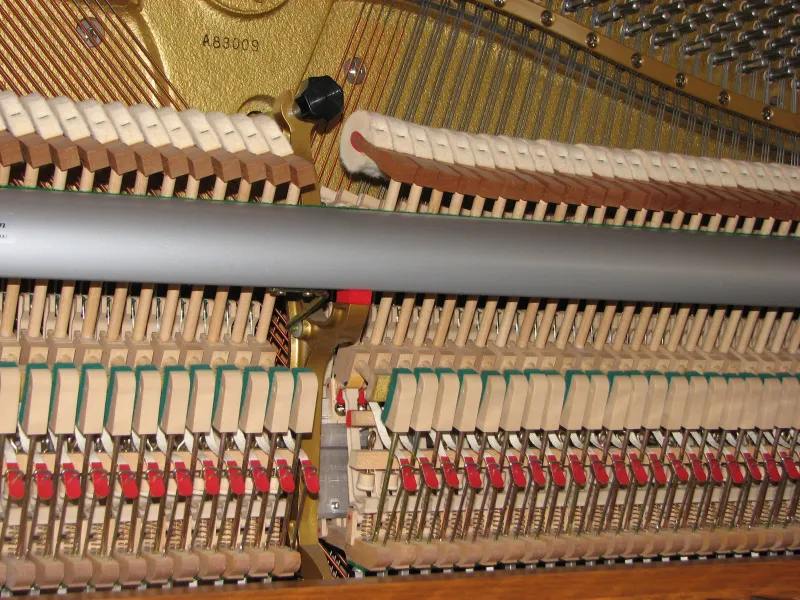
What even response means
In plain terms, regulation looks at how far the key goes down, when the hammer leaves the string, how quickly the action resets so you can play the note again, and whether the damper gets out of the way and then returns. Grand actions and upright actions are built differently, so the screws and springs are not the same, but the goal is the same: the pianist should not have to fight one key and then baby the next.
A well-regulated piano supports control. Soft playing speaks. Repeated notes answer. Chords damp together instead of leaving one string ringing. None of that changes the pitch of the string. If the piano is also out of tune, tuning is a separate agreement. If the tone is harsh even when the action feels even, the next conversation is voicing.
When to ask for it
Ask when the complaint survives a fresh tuning. Typical signs are keys at uneven heights, a sluggish note, a hammer that blocks against the string, dampers that leak, or a keyboard that felt consistent five years ago and no longer does. Seasonal dryness in a Denver house can shift wood and felt enough to show up in the touch. So can heavy practice, a school piano, or an action that was never really finished after a repair.
Regulation is also the follow-up when parts have been repaired or replaced. New hammers or new flanges do not land in perfect relationship to the strings by themselves. That follow-up is discussed as its own scope, not assumed.

What the visit includes
The visit includes playing the piano, measuring or feeling where the action has drifted, and adjusting the items that are still adjustable. It includes explaining which notes are a regulation issue and which notes are worn out. It does not include a guarantee that every piano can be made to feel like a new concert instrument. Badly worn parts are a repair discussion. If the repair is declined, the regulation is limited to what the existing parts can hold.
Time varies. A few notes that block are not the same appointment as a full action that has not been touched in decades. No duration is published because the piano sets it. Cost follows the same idea: the reply after your description is the estimate, not a number on this page.
How to prepare
Tell us what the touch does, and in which range. “The middle two octaves repeat poorly” is better than “it feels bad.” Mention the last tuning and whether anyone has opened the piano. Do not lubricate the action or tighten random screws. Leave the keyboard clear and the room at normal living temperature so the felts are not swollen from a cold corner or baked by a heater aimed at the case.
A form submission is a request, not a reserved hour. The sequence is on How We Work.
Questions about regulation
What does regulation actually change?
It adjusts the action so keys travel more evenly, hammers let off the strings at a consistent point, notes repeat more reliably, and dampers lift and return together. The aim is control and an even response, not a new pitch and not a new tone color.
How is regulation different from tuning?
Tuning sets string pitch. Regulation sets the geometry and timing of the mechanism under the keys. A piano can be freshly tuned and still feel uneven. It can also feel even and be out of tune.
How is regulation different from voicing?
Voicing changes the hammer’s effect on the string and therefore the brightness of the sound. Regulation changes how the key and hammer move. Both can make a piano more satisfying, and they solve different complaints.
How often is regulation needed?
There is no universal calendar. Heavy playing, seasonal humidity swings, and parts that have worn will pull a regulation out of place. Many pianos go years between full regulations and only need attention when the touch stops feeling consistent. A technician can say more after playing the instrument.
Can worn parts be regulated back to new?
Adjustment helps when the parts still have life. If flanges are loose, hammers are deeply grooved, or felts are gone, repair or replacement of those parts may have to come first. Regulation is not a substitute for parts that no longer hold a setting.