Piano and Grand Piano Tuning in Denver
Tuning puts the strings of an acoustic piano at an agreed pitch and makes the unisons and octaves agree with each other. It is the ordinary maintenance visit for an upright, a baby grand, or a grand that has drifted, and it is also the fine pass that follows a larger pitch correction.
People notice tuning when familiar music sounds sour, when one string in a unison beats against the others, or when the whole piano has sunk during a dry winter. In Denver, indoor air often changes between heating season and the rest of the year. Wood moves, the soundboard changes shape slightly, and string tension follows. A move across town, a piano placed on an outside wall, or a long stretch with the lid closed in a spare room can do the same.
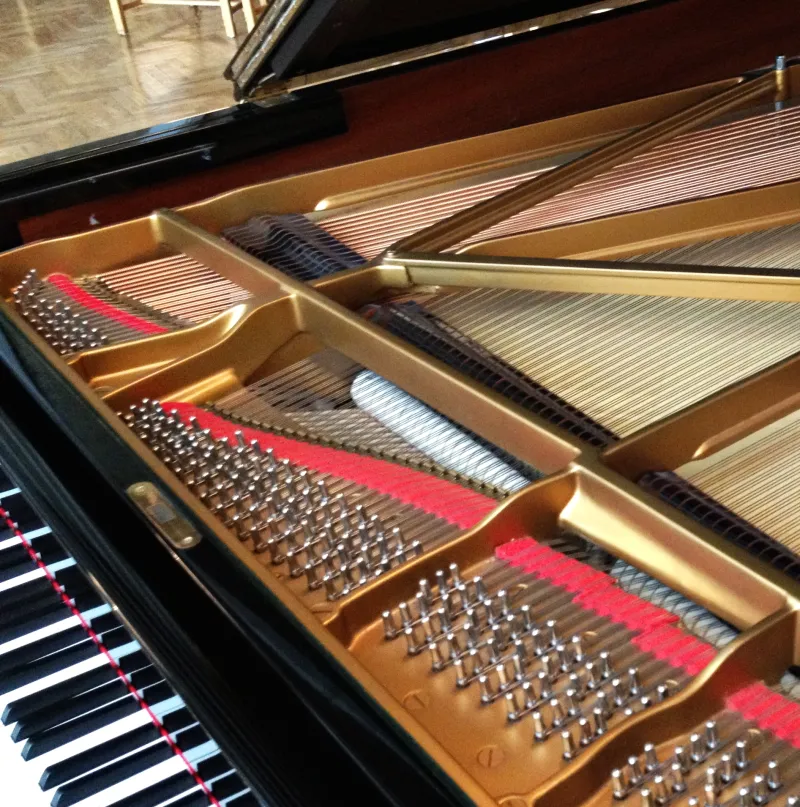
What the visit changes, and what it leaves alone
The result of a tuning is pitch. Each note is brought to the scale that was agreed, usually with A440 as the reference when the piano can take it. The piano should sound stable with itself when you play.
Tuning does not automatically remove mechanical faults. A buzzing agraffe, a broken string, a key that sticks, or a hammer that sounds much brighter than its neighbors can still be there after the pitch is correct. Those belong to repair, regulation, or voicing. Say so in the request if you hear them. A tuning-only visit will not quietly become a repair.
Upright, baby grand, and grand
All three are tuned by setting string pitch. A grand opens from the top. An upright is tuned from the front once the panel is removed. A baby grand is a grand with a shorter scale. None of these shapes can be priced from the name alone.
Climate and moving affect all of them. A piano that just arrived in Denver, or that spent a season in a closed room with hard heating, may be far enough off that a pitch raise is the honest first step. If it is only a little flat, a normal tuning is the conversation.

How often, and how long
Many pianos do well with two tunings a year. A new piano, heavy practice, or a recent move may need shorter gaps. A stable piano in the same room may hold longer. The recommendation after a visit follows how far that piano moved. Time on site also depends on the starting point: a piano near pitch is a different job from one that has dropped a long way or will not hold. Duration is discussed from your description and revised if the piano differs. No length is guaranteed in advance.
What is included, and what needs a look
A tuning visit includes setting the pitch and leaving the piano as even as its condition allows. It does not include replacing strings, repinning, regulating the action, or voicing hammers unless those are agreed as extra work. If the pins will not hold or a string is too corroded to bring up, the technician will stop and tell you. Forcing a fragile piano up to concert pitch is not a favor.
Before the visit
Leave a clear path to the keyboard. If the piano normally sits against a wall, it does not need to be pulled out before the appointment unless you are asked. Keep the room near the temperature you actually live at; tuning a cold piano and then heating the room hard the same day undoes the work. Tell us the last tuning you remember, whether the piano was moved, and whether any notes are dead or sticking.
The request form does not lock a date. Read how visits are arranged and the factors that change cost.
Questions about tuning
How often does a piano need tuning?
A common interval is about twice a year, especially where indoor humidity swings with the heating season. New pianos, concert use, and recent moves often need closer attention. A stable piano in a steady room may go longer. The interval should be chosen after hearing how that piano behaves.
How long does tuning take?
A routine tuning of a piano already near the desired pitch often takes around an hour. A neglected piano, a pitch raise, or repairs found along the way change the time. No fixed duration is promised.
Can any acoustic piano be tuned?
Most uprights, baby grands, and grands can be tuned if the pinblock will hold the pins and the strings and plate are sound enough for the tension. A piano with loose pins, many broken strings, or structural trouble may need repair before a tuning will hold. That limit is part of an honest assessment.
What is standard pitch?
Many pianos are tuned with A above middle C at 440 hertz, often called A440. A piano that has sat far below that pitch may be tuned to a slightly lower pitch first, or raised in stages. The choice is discussed; it is not automatic.
Will tuning fix the action?
No. Tuning changes string pitch only. Sticking keys, uneven touch, and harsh tone point to repair, regulation, or voicing. Mention those symptoms so they are not mistaken for a tuning problem.