Piano Pitch Raise in Denver
A pitch raise is the correction used when an acoustic piano has slipped far below the pitch you want. Years without tuning, a long stay in a dry or unused room, or a move can leave the strings a quarter tone or more flat. Simply “tuning it” in one fine pass may not hold, because the whole structure has to accept a higher tension.
The useful result is a piano brought near the chosen pitch, then fine-tuned when it is stable enough to take a careful tuning. That second step is sometimes the same visit and sometimes a return. Anyone who promises a single trip before hearing how flat the piano is, and how well it holds, is guessing.
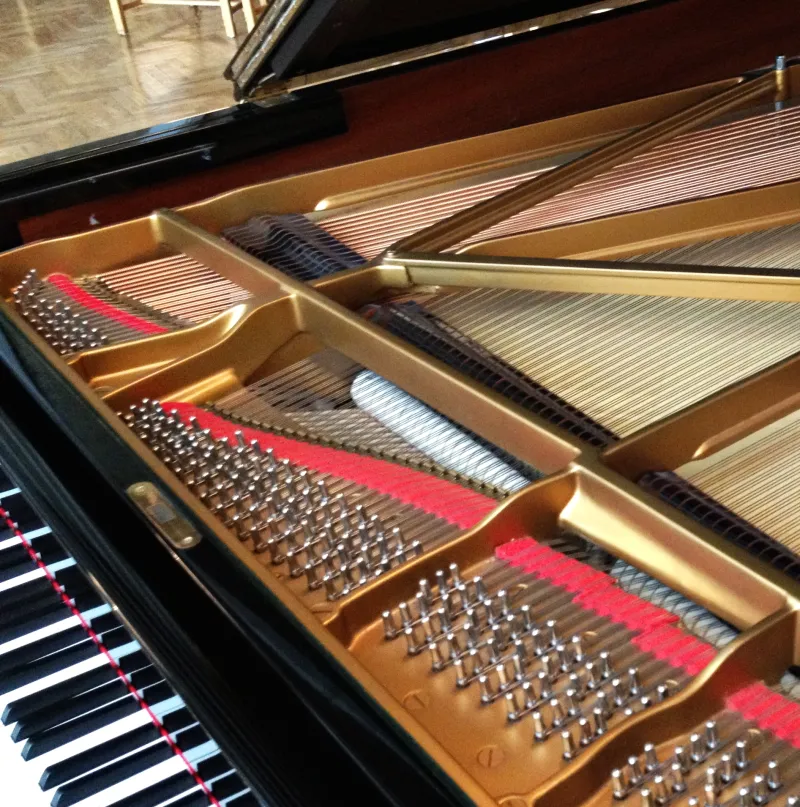
How a raise differs from ordinary tuning
Ordinary tuning refines a piano that is already in the neighborhood of the target, often A440. A pitch raise is the coarse step before that. The strings are brought up across the scale so the soundboard and the plate share the new load. Only then does a fine tuning line the unisons and octaves up. Treating a badly flat piano as a quick tuning is how notes slip back down the same week.
If your piano is only slightly flat, say so. You may not need this service at all. The name is reserved for a real gap, not used as a larger invoice for a normal visit.
What the piano goes through
During the raise, pitch moves more than it does in a routine tuning. You may hear the piano sound rough until the fine pass. That roughness is expected in the middle of the job. It is not the finished state. After the tension is up, the technician listens for notes that will not hold. Loose pins, tired strings, or a piano that was already distressed may mean stopping below concert pitch. A slightly lower reference pitch can be the stable choice. It is discussed, not hidden.
A follow-up tuning is likely when the jump was large or the piano has a history of drifting. The follow-up is part of the recommendation, scheduled only if you want it. It is not an open-ended series of visits.
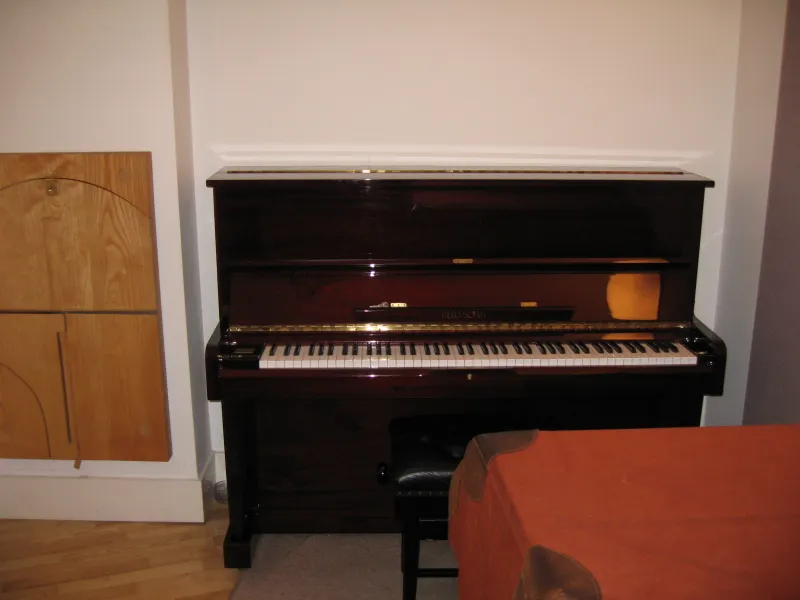
Uprights and grands
Both can need a raise. A small upright that sat in a spare room and a grand that was last tuned before a household move are the same kind of problem at different scales. The time and the risk depend on condition: pin torque, string rust, cracks you already know about, and how far the pitch has fallen. Those are the facts to put in the message. “It has not been tuned since we bought the house” is a useful sentence.
Preparation and cost
Do not try to raise pitch yourself with a tuning lever found online. A wrong pin, or a string taken too high, breaks things. Leave the piano closed, at room temperature, and tell us about broken strings or notes that already fail. If you know it is only a little out, say that too, so the reply can point you back to a normal tuning.
A raise takes more time than a routine tuning, and a return visit adds more. Neither figure is printed as a rate. The cost page lists the factors, and the form is how you ask for a number that belongs to your piano. The message is not a confirmed appointment. How scheduling works explains the difference. If other faults show up, repair is a separate agreement.
Questions about pitch raises
What is a pitch raise?
It is a deliberate raise of overall string tension when a piano has gone flat, usually after a long time without tuning. It puts the instrument near the target pitch so a fine tuning can make musical sense. It is not a polish of a piano that is only slightly off.
Why not just tune it once?
A large jump in tension moves the soundboard and the other strings. The first pass may not hold closely enough to be the finished tuning. A fine tuning after the piano settles is often part of doing the job properly. Sometimes that is the same day, and sometimes it is a later visit.
When does a piano need one?
Common cases are several years without service, a piano that was allowed to fall well below A440, or an instrument that came out of storage. If you can hear that it is only a little flat, say that. A normal tuning may be enough, and calling everything a pitch raise helps no one.
Will one visit always finish it?
No. Some pianos hold a raise and can be fine-tuned immediately. Others drift as the structure takes the new tension, and a return visit is the stable result. The piano decides. The request does not lock a one-trip promise.
Is a pitch raise safe for every old piano?
Not if the pinblock will not hold, the plate is compromised, or many strings are corroded. In those cases the honest recommendation is to stop, repair what can be repaired, or leave the pitch where it is. Raising a fragile piano to concert pitch because a chart says so is not the goal.