Piano Repair in Denver
Repair is for an acoustic piano that is failing in a particular way: a note that will not speak, a buzz that tuning does not remove, a string that broke, a pedal that collapsed, a key that no longer returns. The result you should expect is a clear diagnosis and, if you agree, repair of the fault that was found. You should not expect a promise that any damage can be made new.
Uprights, baby grands, and grands all develop these problems. Age, dry indoor air, a move, and ordinary wear each leave different clues. The first job is to match the clue to the part, then to tell you what the work involves before it starts.
Symptoms worth describing
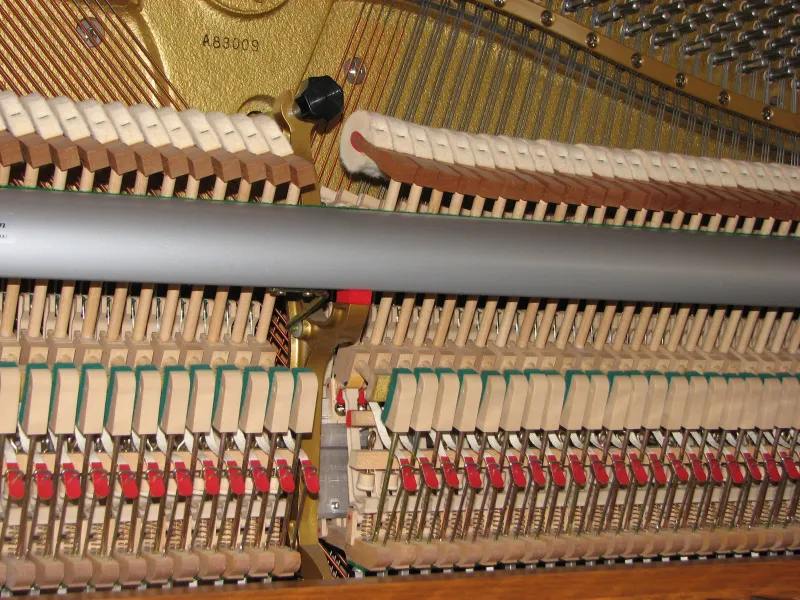
Write down what the piano does, not what a forum said the part is called. Useful reports sound like this: one note buzzes only when played loudly; a key stays down; several neighboring notes are dead after a mover handled the piano; the sustain pedal squeaks and does not catch; a bass string snapped. Those details point the visit. A vague “it needs work” usually means a longer conversation first.
Some symptoms feel like tuning and are not. A unison that beats is a tuning matter. A click from the action, a hammer that misses the string, or a damper that stays off the string is mechanical. If you are unsure, say what you hear and choose “Not sure — please advise” on the form. Tuning and repair can be scheduled together only after both are identified.
What repair can include, and what it does not
Agreed repair can cover a specific failed part or adjustment that is within ordinary service: a string, a key bushing or keytop problem that is really a key repair, a pedal linkage, a hammer that is not traveling, a buzz traced to a loose piece. Keys and pedals have their own page because those complaints are so common. Regulation and voicing are separate if the piano is whole but uneven.
Repair here does not mean full restoration. It does not mean a new pinblock, a new soundboard, a complete action rebuild, or refinishing the case. If the piano needs that scale of work, you will be told. Continuing to patch a piano that cannot hold a repair is not useful to you.
No one can promise a result before seeing the instrument. A description is a start. Wood cracks, loose pins, and previous amateur repairs sometimes change the plan on site. If that happens, the extra work waits until you agree. See how a visit is agreed.
How the repair conversation goes
You send the symptom, the piano type, and the area in Denver. The reply says whether a visit makes sense and what the technician expects to look at. At the piano, the fault is traced. You hear what was found, what can be done that day, and what would be a larger job. Price follows that scope. There is no published repair menu, because two “buzzes” can be a loose screw or a cracked bridge. Cost factors explains how the estimate is built.
Before someone arrives
Do not remove the action, lift strings with household tools, or soak a sticking key in lubricant. Those steps hide the original fault and sometimes add a new one. Clear a path, keep children and pets from the tools, and if a string is already broken, leave the piece rather than pulling it out. A normal room temperature is enough. If the piano was moved or dropped, say so, even if the case looks fine.
Questions about repair
Can every damaged piano be repaired?
No. Some faults are straightforward, and some pianos are too far gone, or the work would amount to a full rebuild. Full restoration is not offered. The honest outcome of an assessment is sometimes “this part can be repaired” and sometimes “this is beyond the work we do.”
Should I describe the symptom or name the part?
Describe what you hear and feel. A buzz, a click, a note that plays once and then stays silent, or a string that snapped is enough. Naming the wrong part in advance does not help, and taking the piano apart to look can create a second problem.
Is a broken string a tuning issue?
A broken string is a repair. Tuning cannot replace it. After a string is replaced, the new string has to be brought up to pitch, so tuning and repair can meet in one agreed visit or in sequence.
Will you repair it on the first visit?
Sometimes, if the fault is clear and the needed work was agreed. If the piano has to be seen before anyone can know the scope, the first visit may be an assessment and the repair follows only after you accept it.
Do you restore old pianos completely?
No. Specific repairs are available. A ground-up restoration, a new soundboard project, or a full refinish is a different trade and is not part of this service.
Related pages: tuning, keys and pedals, and regulation if the mechanism is the real issue.