Piano Voicing in Denver
Voicing is how a technician changes the tone of an acoustic piano. Owners usually ask for it when the instrument is too bright, too harsh at a normal touch, or uneven: one note pings while its neighbor sounds dull. The work is mostly in the hammer felt, which is what strikes the string. The result, when the hammers allow it, is a more even voice across the keyboard and a tone you can live with in the room where the piano sits.
This is not a lesson, and it is not the musical meaning of the word “voicing” that arrangers use for chords. If you want help choosing jazz chords, this page is about the instrument’s tone instead. If the piano itself sounds glassy or patchy, you are in the right place.
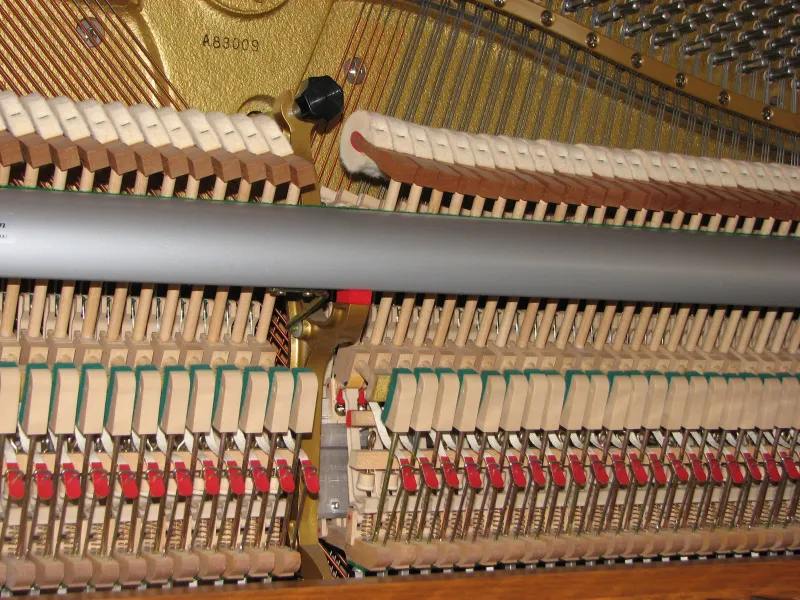
Bright, harsh, or uneven
A piano can become brighter as hammer felt packs down from playing. Dry air does not create that brightness by itself, but a lively room with hard floors will make any brightness more obvious. Unevenness is different: a few notes were filed or needled years ago, or a few hammers are grooved while the rest are not. The ear hears a stripe in the scale.
Before voicing is the right tool, the piano should be close enough to pitch that you can judge tone, and the action should let every hammer arrive at the string. A badly out-of-tune piano, or one with hammers that miss, will send the work in the wrong direction. Tuning and regulation are often the honest first recommendations. They are not bundled in secretly. If they are needed, they are named and agreed.
What voicing includes
The visit includes listening, looking at the hammers, and doing the tone work that the felt can support. The goal is discussed first: a singer who wants less edge, a pianist who wants more clarity, a household that finds the current tone tiring. Voicing can be conservative. Taking a piano too far in one visit is harder to undo than stopping early.
It does not include teaching repertoire. It does not include a promise that an old upright will sound like a large grand. Scale, soundboard, and the room set a ceiling. Hammers that are deeply cut or crumbling may need repair or replacement before any needling is worthwhile. That is an assessment, not a sales script, and it is declined as easily as it is accepted.

Uprights and grands
Both can be voiced. Grands are easier to hear with the lid open, and their hammers are often more accessible. Uprights respond to the same idea of evening the hammers, with the practical limits of an upright action. A baby grand is treated as a grand with a shorter scale, not as a separate product. The room still matters: a piano against a plaster wall will not be judged the same way as one in a carpeted room.
Time, cost, and preparation
A light evening of a few harsh notes is a shorter visit than a full pass on a piano that has never been voiced. No time and no price are printed here. Describe the tone in ordinary words and read what changes the cost. Have the piano at a normal room temperature, and mention the last tuning so the reply can say whether pitch should be handled in the same conversation.
Requests are not bookings. How a visit is confirmed is a separate step.
Questions about voicing
What is piano voicing?
Voicing is work on the hammers, and sometimes related tone factors, so the sound is less harsh or more even from note to note. It changes color and balance. It does not set the pitch.
Is this the same as jazz chord voicings?
No. In piano service, voicing means the tone of the instrument. It has nothing to do with arranging chords, and it is not a playing lesson.
Will tuning make a bright piano warmer?
Only a little, and only if the brightness was really a tuning problem. A piano that is in tune and still sounds metallic or uneven across the keyboard is a voicing question, provided the hammers are in good enough shape to voice.
How long does voicing last?
It lasts until the hammers wear, the room changes the way you hear the piano, or playing packs the felt again. There is no fixed number of years. A later visit may need less work if the first voicing was conservative.
Can very worn hammers be voiced?
Deeply grooved or rock-hard hammers may need shaping or replacement before voicing is worthwhile. That replacement is repair work and is agreed separately. Voicing is not a disguise for hammers that are finished.